
The Ultimate DIY Guide
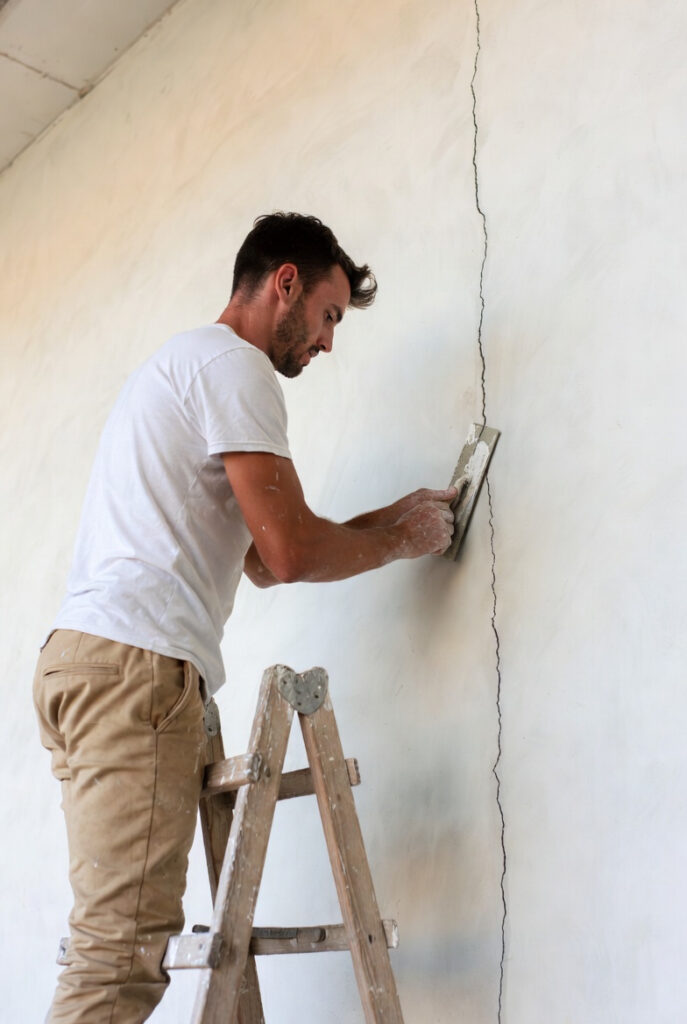
Bricklayer repairing a crack
How to Fix Wall Cracks Before Painting: The Ultimate DIY Guide
You have picked the perfect color, bought high-quality rollers, and cleared the furniture. You are ready to transform your room. But then you see them: those jagged lines running down your wall.
Painting over a crack is the biggest mistake a homeowner can make. Paint is not glue; it won’t hold the wall together, and within weeks, that crack will reappear, ruining your hard work.
The good news? Fixing wall cracks is not reserved for professional contractors. With the right preparation and a bit of patience, you can create a surface so smooth that no one will ever know a crack was there.
In this guide, we will walk you through identifying the type of crack you have, the tools you actually need, and the professional techniques to fix them permanently.
Phase 1: Assess the Damage (Safety First)
Before you open a tub of spackle, you need to understand what your wall is telling you. Not all cracks are created equal.
The “Cosmetic” Crack
These are usually hairline cracks found above door frames or windows. They are often caused by the house settling slightly over time or temperature fluctuations. These are safe to repair yourself.
The “Structural” Danger Zone
If you see any of the following, stop. Do not simply fill these cracks. You may need a structural engineer:
- Cracks wider than 1/4 inch (5mm).
- Diagonal cracks accompanied by doors that stick or won’t close.
- Horizontal cracks in foundation walls.
Note: Remind you that serious structural issues cannot be fixed with spackle. If in doubt, consult a professional.
Phase 2: Gather Your Arsenal
You don’t need a van full of equipment, but you do need specific tools to do the job right. Using a butter knife and old toothpaste won’t cut it.
Essential Tools:
- 5-in-1 Painter’s Tool: For scraping loose debris.
- Utility Knife (Box Cutter): Crucial for the “V-groove” technique.
- Putty Knife (4 to 6 inches): For applying filler.
- Sandpaper: Medium grit (100-120) and fine grit (180-220).
- Sanding Block: To keep the surface flat.
Materials:
- Spackling Paste: Best for small holes and minor cracks in drywall.
- Joint Compound: Better for larger areas or taping.
- Fiberglass Mesh Tape: Mandatory for recurring cracks.
- Primer: Do not skip this.
Phase 3: The “V-Groove” Technique (The Secret Step)
This is the step 90% of DIYers skip, and it is the reason their repairs fail.
If you just smear filler over a hairline crack, it sits on the surface. There isn’t enough surface area for the filler to bond inside the crack. You need to open the crack up to fix it.
Step 1: Widen the Crack
Take your utility knife or the sharp edge of your 5-in-1 tool. Cut into the crack at a 45-degree angle on both sides, creating a “V” shape valley.
It feels counterintuitive to make the crack bigger, but this “V” shape increases the surface area. It gives the compound a solid wedge to anchor into, preventing it from popping out later.
Step 2: Clean the Debris
Use a dry paintbrush or a vacuum cleaner to remove all dust from the V-groove. Filler will not stick to dust.
Phase 4: Filling and Smoothing
Now that the prep is done, it is time to fill. The technique differs slightly depending on the severity of the crack.
For Hairline Cracks (Drywall or Plaster)
- Apply the Filler: Scoop a small amount of spackling paste. Press it firmly into the V-groove. You want to force the material deep into the gap, not just skim the top.
- Overfill Slightly: Spackle shrinks as it dries. Leave a slight mound above the wall surface.
- One Swipe: Don’t overwork it. Make one smooth pass and let it be.
For Recurring or Wider Cracks
If a crack keeps coming back, the wall is moving. Spackle alone isn’t strong enough to hold it. You need reinforcement.
- Apply Mesh Tape: Place a strip of self-adhesive fiberglass mesh tape over the crack.
- Coat with Joint Compound: Apply a thin layer of compound over the tape.
- Feather the Edges: This is crucial. Use your wide putty knife to spread the compound out 2-3 inches on either side of the tape. The goal is to create a gradual slope so the “hump” of the tape becomes invisible.
- Dry and Repeat: Let it dry, sand lightly, and apply a second, wider coat (feathering out 6 inches) if necessary.
Phase 5: The Art of Sanding
Once the patch is completely dry (check the manufacturer’s label, usually 1-4 hours for spackle, 24 hours for compound), it is time to sand.
The Golden Rule of Sanding: Do not sand the center of the patch too hard. You might sand right down to the mesh tape or the crack.
Focus your energy on the edges of the patch. You want to blend the filler seamlessly into the surrounding wall texture. Close your eyes and run your hand over the repair. If you can feel a ridge, you need to sand more.
Phase 6: Why Priming is Non-Negotiable
You might be tempted to just paint over your repair. Don’t.
Filler is porous. It absorbs paint differently than the surrounding painted wall. If you paint directly over it, you will see a dull spot known as “flashing,” where the sheen looks different.
The Fix: Apply a spot coat of primer specifically over your repairs. Once that dries, you are finally ready to paint the entire wall.
| Problem | Likely Cause | Solution |
| Crack reappears in a week | No tape used or movement in wall. | Re-do using fiberglass mesh tape. |
| Repair looks like a hump | Edges were not “feathered” enough. | Sand edges down further and apply a wider coat. |
| Paint looks dull on repair | Skipped the primer. | Prime the spot, then repaint. |
| Filler crumbled out | Dust was left in the crack. | Clean crack thoroughly with a vacuum before filling. |
Repairing cracks in your wall before painting adds a few hours to your project, but it adds years to the life of your paint job. It is the difference between a room that looks “okay” and a room that looks professionally finished.
Take your time with the prep work. The “V-groove” technique and proper sanding are your best friends in this process. Once your wall is smooth and solid, your new paint color will look exactly how you imagined it.
Have you encountered a stubborn crack that just won’t go away? Tell us about your experience in the comments below!
Want to relax while doing housework? Try this app on the Apple App Store. It’s free!
https://apps.apple.com/us/app/sonidos-relajantes-para-dormir/id6756495755