
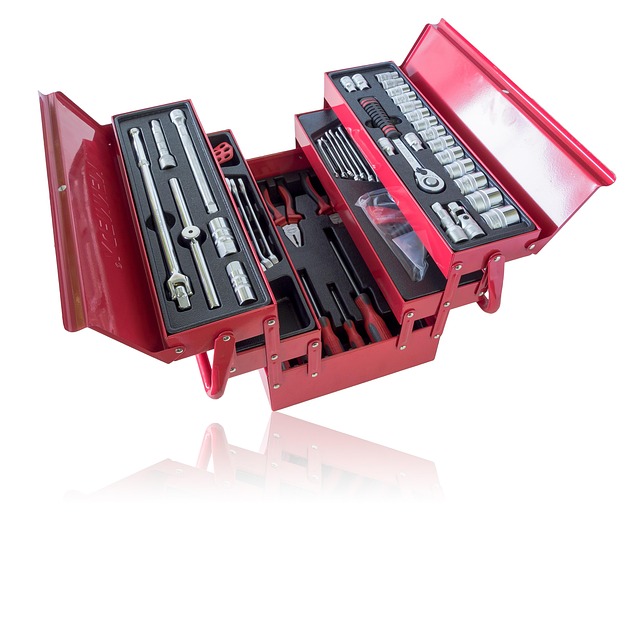
The Perfect Toolbox
There is a familiar feeling of paralysis that hits every aspiring DIYer when they walk into a hardware store. You are standing in the “Hand Tools” aisle, staring at a wall of fifty different hammers. Some cost $5, some cost $50. Some look like space-age weaponry, others look like they belong in a museum.
You ask yourself: Do I really need a laser level? Is a 100-piece screwdriver set a bargain or a trap?
As someone who has spent years building, fixing, and occasionally ruining projects, I can tell you this: You need far fewer tools than you think, but the ones you buy matter more than you realize.
A cluttered toolbox full of cheap, single-use gadgets is the enemy of productivity. The goal of a “Perfect Toolbox” isn’t to own everything; it’s to own the right things that allow you to handle 90% of household tasks—from assembling furniture to fixing a leaky faucet or hanging heavy shelves.
In this guide, we will strip away the marketing noise and build a lean, high-quality kit that will last you a lifetime.
The Golden Rule: Buy Cheap, Buy Twice
Before we list the items, we need to agree on a philosophy.
When you are starting out, the temptation to buy the $19.99 “Homeowner Tool Set” containing 150 pieces is strong. Resist it.
These kits are filled with “soft” metal tools that strip screws, bend under pressure, and hurt your hands. A bad tool makes a simple job frustrating. A good tool makes a hard job feel manageable. You don’t need professional contractor-grade gear (like Hilti or Festool), but mid-range brands (like Stanley, Craftsman, or Milwaukee) are worth the extra few dollars.
Phase 1: The Non-Negotiables (Manual Tools)
These are the tools that will live in your drawer or bag and get used almost weekly.
1. The Claw Hammer (16 oz)
Don’t buy a massive framing hammer or a tiny “tack” hammer. The 16-ounce curved-claw hammer is the universal standard.
- What to look for: A smooth face (not waffle-faced, which damages surfaces) and a comfortable grip (fiberglass or vibration-absorbing rubber). Wood handles look cool but break easier if you miss a hit.
2. The Tape Measure (16 ft / 5 meters)
You cannot build what you cannot measure. A 25-foot tape is often too bulky for indoor work, and a 12-foot tape is just barely too short for measuring a room.
- The Critical Feature: Look for “standout”—how far the tape can extend straight out without snapping. A good tape should handle 7-8 feet of standout so you can measure alone.
- Pro Tip: Avoid the thin, flimsy tapes. They twist and frustrate you. Get a “fat” tape with a wide blade.
3. A Multi-Bit Screwdriver
Instead of carrying 10 different screwdrivers, buy one high-quality handle with interchangeable bits.
- The Essentials: You need Phillips #1 and #2 (the star shape), Flathead 1/4″ and 3/16″ (the slot shape), and arguably a Square drive (Robertson) if you are assembling deck furniture.
- Magnetic Tip: Ensure the shaft is magnetic. There is nothing worse than dropping a screw while standing on a ladder.
4. The Utility Knife (Box Cutter)
Scissors ruin packaging; a utility knife slices it. This is your primary cutting tool for cardboard, drywall, carpet, and opening calm-shell packaging.
- Safety First: Get a retractable model with a locking mechanism. The “folding” style (like a pocket knife) is very popular and safe to carry.
5. Torpedo Level
Hanging pictures, shelves, or mounting a TV requires things to be level. A 9-inch “torpedo” level fits in any box and is accurate enough for household tasks.
- Check: Look for a magnetic strip on one side. It acts as a “third hand” when working with metal studs or appliances.
6. Adjustable Wrench (The Crescent Wrench)
Eventually, you will want a socket set. But to start, an 8-inch or 10-inch adjustable wrench covers almost every nut and bolt size in a typical home.
- Usage Note: Always turn the wrench toward the movable jaw to avoid damaging the tool.
7. Pliers: The Duo
You need two types:
- Needle-Nose Pliers: For reaching into tight spaces, bending wire, and holding small nails.
- Slip-Joint or Tongue-and-Groove Pliers (Channel Locks): These have adjustable jaws specifically designed for gripping pipes and plumbing fixtures. Essential for that leaky sink.
Phase 2: The One Power Tool You Must Own
If you only buy one thing with a battery, it shouldn’t be a saw or a sander. It must be a Cordless Drill/Driver.
The Drill Driver (18V or 20V)
This tool drills holes (for hanging curtains/shelves) and drives screws (for assembling furniture).
- Why 18V/20V? The smaller 12V drills are light, but they lack the power for tougher jobs like drilling into a wall stud. The 18V/20V platform is the sweet spot for power and weight.
- Lithium-Ion: Ensure it uses Li-Ion batteries. They hold a charge for months sitting in your closet, whereas old NiCad batteries would die on their own.
Expert Note: Do not confuse an Impact Driver with a Drill Driver. An Impact Driver is amazing for driving screws but cannot hold smooth drill bits. Start with the Drill Driver (the one with the adjustable chuck).
Phase 3: The Unsung Heroes (Consumables & Safety)
A toolbox without fasteners is just a heavy weight. You need a small organizer with the following:
1. The “Fix-It” Assortment
- Wall Anchors: A small box of plastic drywall anchors and matching screws. You will use these constantly for hanging light decor.
- Assorted Nails: A small pack of finishing nails (for trim) and common nails (for rough work).
- Duct Tape & Painter’s Tape: Duct tape fixes broken things; Painter’s tape labels things and protects surfaces.
2. Personal Protective Equipment (PPE)
I cannot stress this enough: Buy comfortable Safety Glasses.
If they are cheap and scratchy, you won’t wear them. If you don’t wear them, a shard of metal or wood will eventually find your eye.
Also, get a pair of general-purpose work gloves to save your knuckles from scrapes.
The Container: Where Does It All Go?
Don’t buy the giant metal rolling cabinet yet.
For this starter kit, a 16-inch to 20-inch soft-sided tool bag is superior to a hard plastic box.
- Why? It doesn’t crack if you drop it. It has external pockets for easy access to your tape measure and screwdrivers. It is comfortable to carry up and down stairs.
Summary Checklist
Here is your shopping list. If you stick to this, you will have a capable kit for under $150–$200 (depending on the drill brand).
| Category | Item | Specific Feature to Look For |
| Measuring | Tape Measure | 16ft or 25ft, wide blade |
| Striking | Claw Hammer | 16oz, fiberglass handle |
| Turning | Multi-bit Screwdriver | Magnetic tip, spare bits in handle |
| Turning | Adjustable Wrench | 8-inch or 10-inch size |
| Gripping | Needle-Nose Pliers | Rubberized grip |
| Gripping | Tongue-and-Groove Pliers | For plumbing/pipes |
| Cutting | Utility Knife | Retractable, quick-change blade |
| Leveling | Torpedo Level | Magnetic edge |
| Power | Cordless Drill | 18V/20V Lithium-Ion |
| Safety | Safety Glasses | Anti-fog, comfortable |
Building your toolbox is the first step in taking ownership of your home. There is a profound satisfaction in seeing a loose cabinet door or a wobbly table and knowing, “I don’t need to call anyone. I have the tool for that.”
Start with these essentials. Master them. As your skills grow, your collection will naturally expand to include clamps, saws, and sanders. But for now, this kit is your ticket to independence.
Do you have a specific repair project in mind that prompted you to look for tools? Let me know, and I can tell you if this kit covers it or if you need one specialized add-on.
Want to relax while doing housework? Try this app on the Apple App Store. It’s free!
https://apps.apple.com/us/app/sonidos-relajantes-para-dormir/id6756495755