
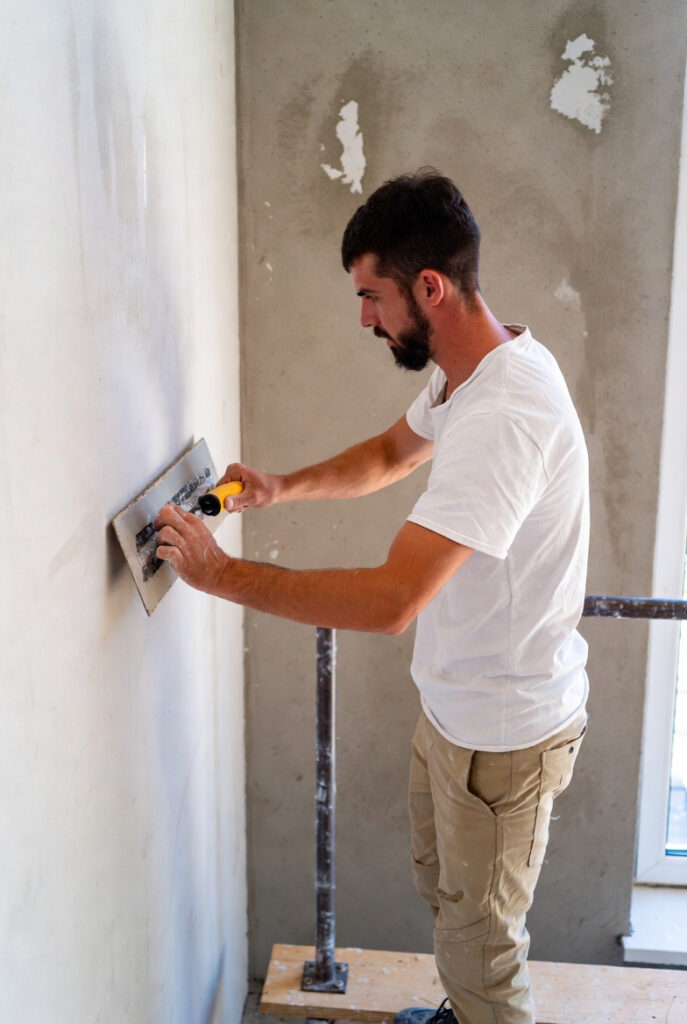
Walls Without Major Renovation
If you walk into a home built between the 1970s and the 1990s, you will likely see it: the dreaded textured wall. Whether it is “popcorn” ceilings, heavy “orange peel,” or the sharp peaks of a “knockdown” finish, texture makes a room feel dated.
Worse yet, textured walls are dust magnets, impossible to clean, and a nightmare to repair if they get chipped.
Most homeowners assume the only solution is to tear down the drywall or pay a professional thousands of dollars to re-plaster the room. Fortunately, that is not true. With the right technique—and a lot of elbow grease—you can achieve sleek, modern, smooth walls yourself.
Here is your definitive guide to removing texture on a budget.
Phase 1: The Safety Check (Do Not Skip This)
Before you scrape a single inch of your wall, we must address a critical safety issue.
The Asbestos Warning: If your home was built before the 1980s (and even into the early 80s), your textured walls or popcorn ceilings may contain asbestos. Asbestos is harmless when left alone, but deadly when disturbed and inhaled.
- The Rule: If your home is pre-1985, buy an asbestos test kit online or hire a lab to test a small sample.
- The Result: If it tests positive, stop. You cannot DIY this. You must hire an abatement professional or cover the wall with new drywall (encapsulation).
Assuming you are clear of safety hazards, let’s determine the right method for you.
Phase 2: The “Water Test”
Not all texture is removed the same way. You need to know if your texture has been painted over.
- Find an inconspicuous spot (like behind a door).
- Spray it with water and wait 10 minutes.
- Scrape it with a fingernail or putty knife.
- If it softens and scrapes off easily: The texture is unpainted. You are lucky! Use Method A.
- If the water beads up and the texture stays hard: It has been painted. The paint acts as a shell. You must use Method B.
Method A: The “Soak and Scrape” (For Unpainted Texture)
This is the messy but fast method. It is most common for popcorn ceilings but works on unpainted wall texture too.
Tools Needed:
- Garden pump sprayer (filled with warm water).
- Wide floor scraper or a 10-inch taping knife.
- Plastic drop cloths (lots of them).
Step 1: Create a Sauna
Cover every inch of your floor and furniture with plastic. This process creates a wet sludge that ruins carpets instantly.
Step 2: Hydrate the Wall
Pump up your garden sprayer and mist a 4×4 foot section of the wall. Let it sit for 10–15 minutes. The water dissolves the binder in the texture.
Step 3: The Gentle Scrape
Hold your scraper at a low angle (about 30 degrees). Push gently. The texture should fall off like wet oatmeal. If it resists, spray it again. Be careful not to gouge the drywall paper underneath.
Method B: Skim Coating (The “Cover-Up” Technique)
If your walls are painted, water won’t touch the texture. You can’t scrape it off without destroying the drywall. Instead, you must fill in the valleys to make the surface level. This is called “Skim Coating.”
Tools Needed:
- Joint Compound: Buy the “All-Purpose” or “Lightweight” pre-mixed bucket.
- Paint Roller: Thick nap (3/4 inch).
- The “Magic Trowel” or Squeegee: A wide, flexible smoothing blade (12-14 inches).
- Mud Pan.
Step 1: Prep the Surface
Knock off any high peaks or sharp bumps with a coarse sanding pole or a scraper. You aren’t trying to remove the texture, just the sharpest tips sticking out. Wipe away the dust.
Step 2: The “Roll-On” Hack
Here is the secret to doing this quickly without hurting your wrist.
- Thin your joint compound with a little water until it has the consistency of pancake batter or thick yogurt.
- Pour it into a paint tray.
- Dip your paint roller in the mud and roll it onto the wall. Get a thick, even coat over the texture.
Step 3: Squeegee It Smooth
Immediately after rolling, take your wide taping knife (or a specialized squeegee tool known as a “Magic Trowel”). Start at the top corner and pull down.
- The Goal: You are not trying to leave a thick layer on top. You are trying to fill the low spots.
- Pressure: Apply firm pressure. The blade should ride over the high points of the texture, leaving mud only in the dips.
Step 4: Rinse and Repeat
Let the first coat dry completely (usually 24 hours). It will look messy and you will likely still see texture. This is normal.
Repeat the process. Roll on a second, thinner coat and smooth it out. This second coat usually hides 95% of the remaining texture.
Phase 3: The Final Polish
Whether you used Method A or Method B, your wall is now flat, but it’s not finished.
- Sand: Use a pole sander with 120-grit paper. Sand the entire wall to blend any ridges or tool marks.
- Prime: This is crucial. The fresh joint compound is very porous. You must use a High-Build Primer or a drywall sealer. If you paint directly on the mud, the paint will look blotchy.
- Paint: Apply two coats of your favorite matte or eggshell paint. Avoid semi-gloss, as high shine highlights any tiny imperfections you might have missed.
Smoothing textured walls is not complex, but it is labor-intensive. It is a test of patience. However, the result is a home that feels cleaner, brighter, and significantly more modern.
If you are on the fence, try one small wall in a bedroom first. Once you see the smooth, museum-quality finish, you will find the motivation to tackle the rest of the house.
Are you dealing with popcorn ceilings or orange peel walls? Tell us which method you are going to try in the comments below!
Want to relax while doing housework? Try this app on the Apple App Store. It’s free!
https://apps.apple.com/us/app/sonidos-relajantes-para-dormir/id6756495755