
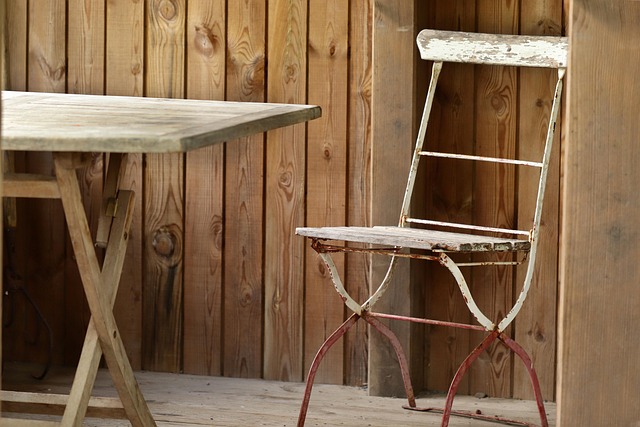
Restoring Wood Furniture
It is the classic dinner party tragedy. You wake up the next morning, clear the table, and lift a glass only to find a cloudy white ring stamped onto your mahogany finish. Or perhaps a dropped candle or a hot saucepan has left a scorched scar on your dining table.
For many, this looks like the end of the furniture. We assume that to fix a 2-inch mark, we have to strip, sand, and refinish the entire tabletop—a messy, toxic, and time-consuming job.
Here is the good news: You usually don’t.
Most common damage to wood furniture is superficial. It exists in the finish (the lacquer, varnish, or shellac) rather than the wood itself. By understanding how these finishes react to heat and moisture, you can often “surgically” repair the damage using household items.
In this guide, we will break down the chemistry of the stain to choose the right cure, distinguishing between the “White Ring” (moisture) and the “Black Spot” (char).
Part 1: The Diagnosis (White vs. Black)
Before you grab a sander, look closely at the color of the damage. The color tells you how deep the problem goes.
1. The White Ring (Moisture)
If the mark is cloudy, milky, or white, the damage is surface-level. It means moisture (condensation from a cold glass or heat from a pizza box) has become trapped inside the layer of wax or finish, but it hasn’t touched the actual wood fiber.
- Difficulty: Easy to Medium.
- Strategy: Release the moisture.
2. The Black Spot (Burn/Rot)
If the mark is dark brown or black, the damage has penetrated the finish and reacted with the wood itself. This is usually caused by fire (cigarettes, candles), extreme heat (hot pans), or long-standing water that has caused mold/rot.
- Difficulty: Medium to Hard.
- Strategy: Removal and Filling.
Part 2: Removing White Water Rings
The goal here is to draw the trapped moisture out of the finish or re-amalgamate the finish so the cloudiness disappears. We will start with the least invasive method and move to the most aggressive.
Method 1: The Hairdryer (Thermal Evaporation)
This is the safest starting point. We use gentle heat to evaporate the trapped water so it can escape through the pores of the finish.
- Set your hairdryer to low/medium heat.
- Hold it about 4-6 inches away from the ring.
- Move it back and forth gently. Do not stay in one spot, or you risk melting the finish.
- After about 10-15 minutes, you should see the ring start to fade.
- Note: If this doesn’t work, the moisture is trapped too deep for air heat.
Method 2: The Iron Trick (High Risk, High Reward)
This is a favorite among antique restorers, but it requires caution.
- Lay a clean, dry, white cotton towel (like a t-shirt) over the stain. Do not use a colored towel, or the dye might transfer.
- Set your iron to “Low” or “Wool.” Ensure the steam function is OFF. Steam will add more water and ruin the table.
- Press the iron gently on the towel over the stain for just 10–15 seconds.
- Lift and check. The heat warms the oil in the finish, allowing the moisture to escape into the towel. Repeat until gone.
Method 3: The Mayonnaise Poultice (The Slow Method)
It sounds like an urban legend, but it works on oil-based finishes. Mayonnaise contains oil and vinegar. The oil seeps into the finish to displace the water, while the vinegar helps break down the surface tension.
- Apply a liberal layer of mayonnaise (full fat) over the ring.
- Let it sit for several hours or overnight.
- Wipe it away with a clean cloth. The oil often nourishes the wood while removing the haze.
- Alternative: You can mix equal parts olive oil and vinegar.
Part 3: Repairing Burn Marks
Burn marks are different. You cannot “clean” a burn; you must remove the carbonized (burnt) material. This is a physical repair, not a chemical one.
Scenario A: The Surface Scorch
If the burn is light (just slightly rough and brown), the damage is likely contained in the clear coat.
- Clean the area with mineral spirits (white spirit) to remove wax.
- Super-Fine Abrasion: Take 0000 steel wool (the finest grade available). Dip it in a little lemon oil or furniture paste wax as a lubricant.
- Rub gently: Rub with the grain of the wood (never circles). You are gently scraping away the burnt layer of varnish.
- Spot Seal: Once the black is gone, you will have a dull spot. Apply a dab of clear nail polish or a wipe-on polyurethane to restore the shine.
Scenario B: The Deep Char (The Crater)
If the wood is black and cratered (like a cigarette burn), you have to perform “wood surgery.”
Tools Needed:
- A curved blade (like an X-Acto knife or craft blade).
- Wood filler (stainable) or a Burn-In Stick (shellac stick).
- Fine sandpaper (320 grit).
- Touch-up marker pen.
The Process:
- Excavate the Char: Use the curved blade to gently scrape out the black, carbonized wood. You must get down to healthy, raw wood. The hole will look worse before it looks better.
- Clean the Edges: Lightly sand the edges of the crater so they aren’t sharp.
- Fill the Void:
- For painted/dark furniture: Use a hard wax filler stick that matches the color. Melt it into the hole, let it cool, and scrape flush with a credit card.
- For stained wood: Use a stainable wood putty. Overfill slightly (it shrinks). Let it dry.
- Camouflage:
- Once the filler is sanded flush, it will look like a plain blob. You need to draw the grain back in.
- Use a fine-point felt furniture marker (slightly darker than the wood) to connect the grain lines across the patch. This is the secret to making it invisible.
- Seal: Spray a tiny amount of lacquer or apply a dab of varnish to seal the repair and match the sheen of the table.
Part 4: Blending the Sheen
The biggest mistake DIYers make is leaving a “clean spot.” If you used steel wool or an abrasive on one spot, it will look different from the rest of the dusty, waxy table.
To finish the job like a pro:
- Wax the Whole Table: Once your repair is dry, apply a high-quality paste wax to the entire surface.
- Buff: Buff it out with a lint-free cloth. This unifies the sheen, making your repair blend in perfectly with the surrounding area.
Prevention
Accidents happen, but furniture surfaces are delicate ecosystems. The best way to avoid repeating this process is to understand the vulnerabilities of your finish.
- Shellac (Antiques): extremely sensitive to alcohol and heat.
- Lacquer (Mid-century): sensitive to water rings.
- Polyurethane (Modern): tough, but hard to patch if burnt.
By keeping a stash of coasters and a trivet nearby, you protect your investment. But if life happens, remember: patience and the right technique can almost always reverse the damage.
Did this guide save your dining table? Next, would you like to learn how to fix wobbly chair legs to complete your dining set restoration?
Want to relax while doing housework? Try this app on the Apple App Store. It’s free!
https://apps.apple.com/us/app/sonidos-relajantes-para-dormir/id6756495755